4th of July Dog Safety: 15 Tips Every Owner Needs
✍ WACKYWALK'R TEAM | 📖 10 MIN READ | 🏷 SAFETY · 4TH OF JULY · DOG HEALTH
4th of July Dog Safety: The Complete Guide to Keeping Your Best Friend Safe This Weekend
July 5th is the busiest day of the year for animal shelters. Here's everything you need to know.
· · 🐾 · ·
The 4th of July is America's favorite summer celebration. Fireworks, cookouts, family, and fun. But for millions of dogs across the country, it's the single most terrifying day of the year.
July 5th is the busiest intake day for animal shelters nationwide. Shelters report a 30 to 60 percent increase in lost pet intakes between July 4th and 6th. Nearly 1 in 5 lost pets go missing after being frightened by fireworks or loud noises.
Sources: Shelter Animals Count (2021–2024), ASPCA (2014)
Your dog doesn't understand what fireworks are. They don't know it's a celebration. To them, the sky is exploding. And their only instinct is to run.
This guide covers everything you need to know to make sure your best friend is safe, calm, and home with you when the weekend is over.
· · 🐾 · ·
We Celebrate Fireworks. Your Dog Hears Explosions.

We celebrate fireworks. Your dog hears explosions.
To us, fireworks are beautiful. To your dog, they're random, unpredictable explosions happening with no warning and no explanation. Dogs hear at roughly four times the range of humans. What sounds like a celebratory pop to you can sound like a deafening blast to them.
26% of dogs specifically fear fireworks. 49–52% show significant fear responses to loud noises. That's every other dog on your block.
Sources: Salonen et al., 2020 (Scientific Reports); Riemer, 2019 (PLOS ONE)
Signs Your Dog Is Stressed
Not every dog reacts the same way. Some signs are obvious — trembling, hiding, barking. Others are easy to miss. Watch for:
- Panting when it's not hot
- Pacing or restlessness
- Drooling more than usual
- Refusing food or treats
- Trying to escape or dig
- Destructive behavior they don't normally show
- Excessive yawning and lip licking
These are all stress signals. If you see them, your dog needs help — not punishment.
How to Help
Keep them indoors. This is the single most important thing you can do. Bring your dog inside well before fireworks start — ideally before dark. Even dogs who are normally fine outdoors can panic when the first firework goes off.
Close windows and curtains. Reduce the noise and block the flashing lights. Both are triggers. A dark, quiet room is your dog's best friend tonight.
Turn on music or the TV. White noise, classical music, or even a familiar TV show can help mask the sound of fireworks. The goal isn't to drown out the fireworks — it's to fill the silence between the booms so each one isn't as jarring.
Stay calm. Your dog takes emotional cues from you. If you're tense, they'll be tense. Act normal. Speak in your regular voice. Don't overcorrect or coddle — just be present and steady.
Create a safe space. A crate, a closet, an interior room with no windows. Somewhere your dog feels enclosed and protected. Add a favorite blanket, a familiar toy, and a treat. Let them retreat there on their own terms.
Talk to your vet in advance. If your dog has severe noise anxiety, your veterinarian can prescribe medication or recommend supplements. This needs to happen before the holiday — not during it. If you're reading this on July 3rd and your dog has a history of fireworks panic, call your vet first thing in the morning.
· · 🐾 · ·
It Only Takes One Loud Boom.

It only takes one loud boom.
A gate left open. A leash that slips. One firework. Five minutes later, your best friend is gone.
This isn't a scare tactic. It's what actually happens.
Maricopa County, Arizona took in 310 stray dogs around July 4th, 2023. Only 41 were returned to their owners. That's an 87% loss rate — in a single county, in a single weekend.
Dogs in a panic state are not thinking. They're not listening. They are running on pure adrenaline, and they can clear fences, break through screens, and slip collars they've worn comfortably for years. A dog who has never bolted before can bolt for the first time tonight.
"Don't assume that because 'they've never run before,' they won't."
Before the Weekend Starts
Check collars and tags. Make sure your dog's collar fits snugly — you should be able to fit two fingers under it, but no more. Tags should have your current phone number. If you've moved or changed numbers since you got the tag, update it now.
Verify microchip information. A microchip is only useful if the contact information is current. Log into your microchip company's website and confirm your address and phone number. If your dog isn't microchipped, many vets and shelters offer low-cost microchipping — it takes seconds and it's the single best way to get a lost dog home.
Microchipped dogs are returned to their owners 52% of the time, compared to 22% for dogs without chips.
Source: American Veterinary Medical Association (AVMA)
Keep pets inside before dark. Don't wait until the fireworks start. Neighbors may set off firecrackers before sunset. Bring your dog in early and keep them in.
Exercise them earlier in the day. A tired dog is a calmer dog. Get their walk, fetch, and playtime done well before the evening. Burn off that energy while the world is still quiet.
Secure all doors, gates, and windows. Do a full perimeter check. That gate latch that sticks? Fix it today. The screen door that doesn't close all the way? Handle it now. A panicked dog will find every weakness in your setup.
Don't take your dog to fireworks displays. It seems obvious, but every year people bring their dogs to fireworks shows. Don't. Even "calm" dogs can be overwhelmed by the volume and crowd. Leave them home in their safe space.
· · 🐾 · ·
If You Can't Hold Your Hand on the Pavement, Neither Can Your Dog.

If you can't hold your hand on the pavement, neither can your dog.
The 4th of July isn't just about fireworks. It's the middle of summer, and the heat itself is a serious danger for your dog.
Here's what most people don't realize:
77°F air = 125°F asphalt
86°F air = 135°F asphalt
Paw pad burns can happen in 60 seconds at these surface temperatures.
The 7-Second Test
Place the back of your hand flat on the pavement. If you can't hold it there comfortably for 7 seconds, it's too hot for your dog's paws. This simple test, recommended by the American Animal Hospital Association (AAHA), takes five seconds and can prevent a painful injury and an emergency vet visit.
Walk Smart
Walk early or late. The safest times are before 9 AM and after 7 PM when surfaces have had time to cool. If you can't walk during those windows, stick to grass, dirt paths, or shaded areas.
Bring water. Always. A collapsible bowl or a water bottle with a built-in dish weighs almost nothing and can prevent dehydration and overheating. Offer water every 15 to 20 minutes during warm-weather walks.
Watch for signs of heatstroke: excessive panting, drooling, bright red tongue, lethargy, stumbling, vomiting, or collapse. Heatstroke in dogs can become fatal in 15 to 30 minutes. If you see these signs, move to shade, apply cool (not cold) water to their body, and get to a vet immediately.
Never leave your dog in the car. Not even for "just a minute."
A car's interior heats by 20°F in 10 minutes. On an 80°F day, the inside of your car reaches 114°F in under 30 minutes. Cracking the windows has no significant effect on the heating rate.
Source: Stanford University School of Medicine
· · 🐾 · ·
The Cookout Your Dog Shouldn't Clean Up
The cookout is as much a part of the 4th of July as the fireworks. And while your dog is doing their best impression of a vacuum cleaner under the picnic table, several common BBQ foods can send them to the emergency vet.
Foods That Are Toxic to Dogs
Onions and garlic — both raw and cooked — damage red blood cells and can cause anemia. This includes onion rings, salsa, guacamole, and anything seasoned heavily with garlic powder.
Grapes and raisins can cause sudden kidney failure in dogs. Even a small amount can be dangerous, and there's no way to predict which dogs are susceptible.
Chocolate — especially dark chocolate and baking chocolate — contains theobromine, which dogs metabolize much more slowly than humans. A few squares from a s'mores setup can be a serious problem.
Xylitol (birch sugar) is found in sugar-free gum, some peanut butters, sugar-free drinks, and many baked goods. It causes a rapid, life-threatening drop in blood sugar and can lead to liver failure.
Corn cobs are one of the most common causes of intestinal blockage in dogs during the summer. Dogs can break off a large piece and swallow it whole. The cob doesn't digest, doesn't pass, and often requires surgical removal.
Cooked bones — especially chicken and rib bones — can splinter and puncture the esophagus, stomach, or intestines. Raw bones are generally safer, but cooked bones are never okay.
Alcohol — even small amounts can cause vomiting, diarrhea, difficulty breathing, and in severe cases, coma. Don't leave drinks unattended at ground level.
Other Party Hazards
Glow sticks and sparklers. Dogs love to chew glow sticks — the liquid inside is a mild irritant that causes excessive drooling and agitation. Sparklers, however, can cause serious burns to the mouth, face, and paws.
Citronella candles and tiki torch fuel. Citronella is mildly toxic to dogs if ingested, and tiki torch oil (paraffin-based) can cause chemical pneumonia if aspirated. Keep both out of reach.
Sunscreen and bug spray. Human sunscreen often contains zinc oxide, which is toxic to dogs. If your dog needs sun protection, use a pet-safe sunscreen. Same goes for insect repellent — DEET is harmful to dogs.
· · 🐾 · ·
Not Every Dog Can Swim
If your 4th of July involves a pool, lake, or beach, don't assume your dog knows how to swim. Not all breeds are natural swimmers, and even dogs who love water can get into trouble with currents, waves, or pool edges they can't climb out of.
Never leave your dog unsupervised near water. This includes backyard pools. Dogs can fall in and not find the steps or ladder to get out.
Watch for blue-green algae. Toxic algae blooms are increasingly common in warm-weather months and can be fatal to dogs within hours. If the water looks green, foamy, or has a paint-like surface, keep your dog away from it entirely.
Rinse your dog after swimming. Chlorine, salt water, lake bacteria, and algae can irritate skin and cause illness if ingested during grooming.
Provide fresh drinking water. Dogs who are hot and thirsty will drink whatever water is available — pool water, lake water, ocean water. Salt water causes dehydration. Pool water can upset their stomach. Always have fresh water nearby so they drink from the bowl, not the source.
· · 🐾 · ·
Act Immediately. The First Hours Are Critical.
Despite your best efforts, it can happen. If your dog escapes during the holiday, act immediately.
Search your immediate area first. Frightened dogs often don't go far. Check under porches, decks, bushes, and in neighbors' yards. They may be hiding within a block of your home.
Call local shelters and animal control — and go in person. Don't just call. Descriptions over the phone can be unreliable. Visit with a clear photo of your dog. Check back daily — dogs may not arrive at a shelter until days after they go missing.
Contact your microchip company. Report your dog as lost. Many microchip companies have lost-pet alert systems that notify local shelters and veterinary offices.
Post on social media. Nextdoor, local Facebook lost pet groups, PawBoost, and your personal social media. Include a clear photo, your dog's name, the date and location they went missing, and your phone number. Ask people to share.
Post physical flyers. Yes, old-school flyers still work. Post them at intersections, vet offices, pet stores, dog parks, and community boards within a mile of where your dog went missing.
Don't stop looking. Dogs have been found days, weeks, and even months after going missing. Keep checking shelters. Keep posting. Keep looking.
· · 🐾 · ·
Your Dog Doesn't Care About Fireworks. They Care About You.

Your dog doesn't care about fireworks. They care about you.
At the end of the day, your dog doesn't care about the fireworks, the cookout, or the party. They care about you. They want to feel safe, and they look to you to make that happen.
Creating a safe space doesn't have to be complicated. It can be as simple as:
- Play before dark to burn off energy
- Close the curtains when the sun goes down
- Put on some music or white noise
- Set up their favorite spot — blanket, toy, treat
- Be there. Just be present.
The best 4th of July for your dog is the one where they wake up on July 5th still feeling safe, still at home, and still with you.
· · 🐾 · ·
Before the Fireworks Start
PREP (DO THIS NOW)
- ☐ Update collar tags with current phone number
- ☐ Verify microchip registration information
- ☐ Secure all gates, fences, and screen doors
- ☐ Talk to your vet about anxiety medication if needed
- ☐ Stock up on treats and a new chew toy for distraction
- ☐ Take a current, clear photo of your dog (in case of emergency)
DAY OF
- ☐ Exercise your dog early — walk, fetch, playtime before noon
- ☐ Bring them inside well before dark
- ☐ Close all windows, curtains, and blinds
- ☐ Set up their safe space: crate, interior room, or closet
- ☐ Turn on music, TV, or white noise
- ☐ Put away all BBQ food, drinks, and trash
- ☐ Do a final perimeter check: gates, doors, windows
DURING FIREWORKS
- ☐ Stay calm — your energy affects theirs
- ☐ Don't force them out of hiding
- ☐ Offer treats, toys, or a frozen Kong for distraction
- ☐ If they want to be near you, let them
- ☐ Don't punish fear behavior — trembling, hiding, and panting are normal
AFTER
- ☐ Check the yard for firework debris before letting your dog out
- ☐ Watch for signs of stress the next day (some dogs stay anxious for 24–48 hours)
- ☐ If your dog escaped, begin searching immediately and contact shelters
· · 🐾 · ·
4th of July Dog Safety FAQ
Are fireworks dangerous for dogs?
Yes. Fireworks are one of the leading causes of noise-related anxiety in dogs. Research shows that 26% of dogs specifically fear fireworks, and nearly half of all dogs show significant stress responses. The noise can trigger panic, causing dogs to bolt, injure themselves, or become lost. July 5th is the busiest intake day at animal shelters nationwide because of fireworks-related escapes.
What should I do if my dog is afraid of fireworks?
Keep them indoors in a quiet, interior room with curtains closed. Turn on calming music or white noise to mask the sounds. Stay calm yourself — your dog takes emotional cues from you. Create a safe retreat space with their favorite blanket and toys. If your dog has severe anxiety, talk to your vet before the holiday about medication or calming supplements.
How hot is too hot for dog paws?
Use the 7-second test: place the back of your hand on the pavement. If you can't hold it there for 7 seconds, it's too hot for your dog. When the air temperature is 77°F, asphalt can reach 125°F. At 86°F, asphalt hits 135°F. Paw pad burns can occur in just 60 seconds. Walk early in the morning or after 7 PM when surfaces have cooled.
What human foods are toxic to dogs at BBQs?
Common BBQ foods that are toxic to dogs include onions and garlic (cause anemia), grapes and raisins (kidney failure), chocolate (theobromine poisoning), xylitol/birch sugar in sugar-free products (blood sugar crash and liver failure), corn cobs (intestinal blockage), cooked bones (splintering risk), and alcohol. Keep all food and trash secured and out of your dog's reach.
What should I do if my dog goes missing on July 4th?
Act immediately. Search your immediate area — frightened dogs often hide nearby. Call and visit local shelters and animal control in person with a photo. Contact your microchip company to report your dog as lost. Post on Nextdoor, Facebook lost pet groups, and PawBoost with a clear photo, your dog's name, and your phone number. Put up physical flyers within a mile radius. Don't stop looking — dogs have been found weeks and even months later.
How can I keep my dog calm during fireworks?
Exercise them well before the evening to burn off energy. Bring them inside before dark. Create a quiet safe space in an interior room, closet, or crate with their blanket and favorite toy. Close all curtains and windows. Play calming music or white noise. Stay calm and present — don't overcorrect or coddle, just be steady. Offer treats or a frozen Kong as a distraction. Never punish fear behavior.
· · 🐾 · ·
From all of us at WACKYwalk'r — have a safe, happy 4th of July. Give your dogs an extra treat, an extra belly rub, and a quiet place to ride it out. They've earned it.
And when the weekend is over and it's time to get back outside? Grab a WUNDERball, head to the yard, and throw one for the good boy or girl who made it through another July 4th right by your side.
Handmade. Natural. Built for dogs who live outside and owners who love them.
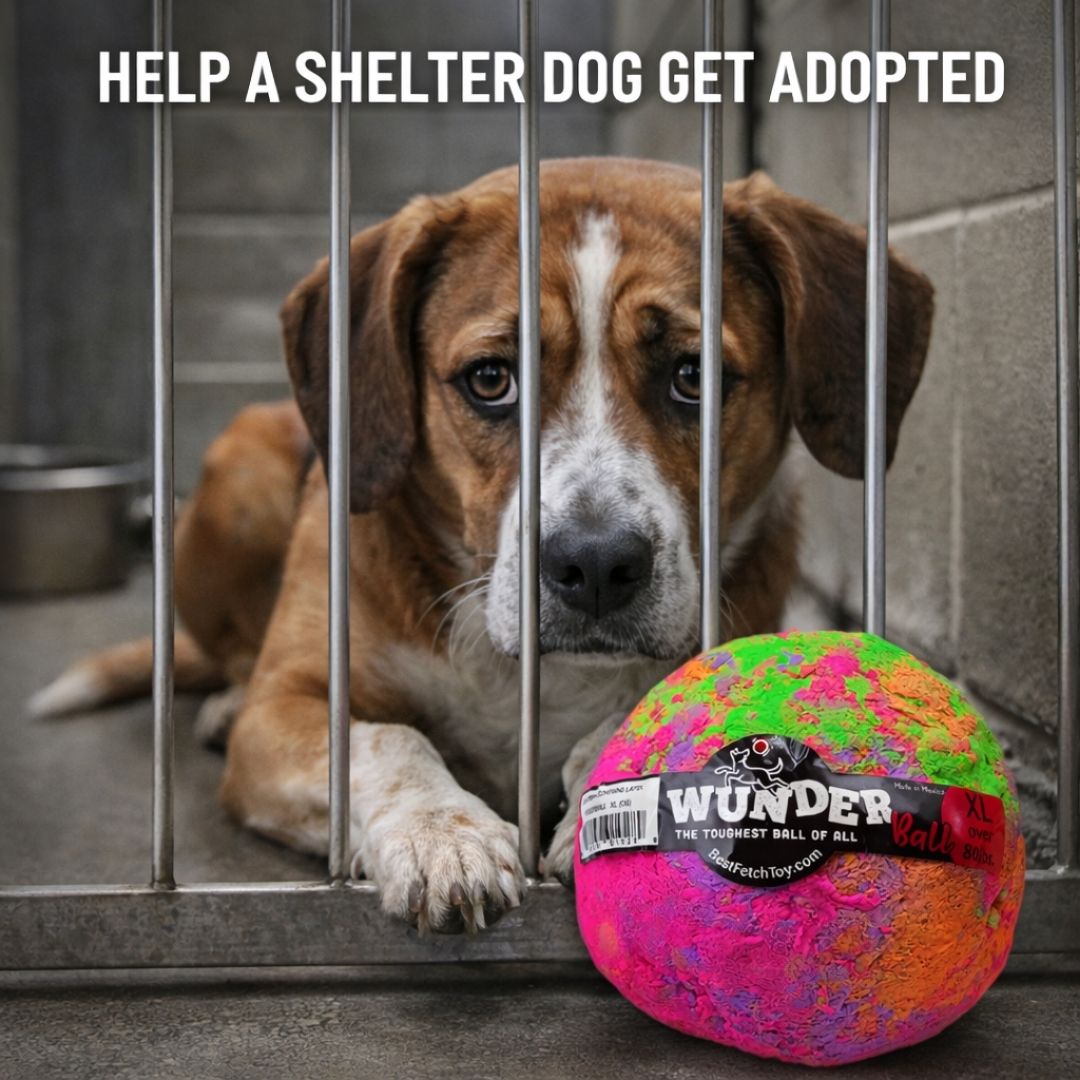
We donate a portion of every sale to shelters through our Play It Forward program — because every dog deserves to feel safe.
· · 🐾 · ·
SOURCES
- ASPCA — "Pets and Fireworks Safety Tips" (2014 survey data)
- Shelter Animals Count — National shelter intake data (2021–2024)
- Salonen, M. et al. — "Prevalence, comorbidity, and breed differences in canine anxiety in 13,700 Finnish pet dogs." Scientific Reports, 2020
- Riemer, S. — "Not a one-way road: Severity, progression and prevention of firework fears in dogs." PLOS ONE, 2019
- American Veterinary Medical Association (AVMA) — Microchip return rates and pet identification
- American Animal Hospital Association (AAHA) — Hot pavement safety guidelines
- Stanford University School of Medicine — Vehicular interior temperature study
- American Kennel Club (AKC) — Holiday pet safety guidelines
- Trupanion Pet Insurance — July 4th pet injury claims data
- Maricopa County Animal Care and Control — July 2023 stray intake data
© 2026 WACKYwalk'r · gowacky.us