The Dog Ball with an Unpredictable Bounce: Why Dogs Love the Surprise Factor
The Evolution of Fetch: Why Predictability Leads to Boredom
Every dog owner knows the scene: you throw the ball, your dog sprints after it, brings it back, and waits for the next throw. Repeat this fifty times, and something changes. That initial spark in your pup's eyes starts to dim. The tail wags a little slower. The chase becomes mechanical rather than joyful. This is the fetch paradox, where the very game designed to excite your dog eventually becomes routine. Varying play methods can help maintain engagement for dogs who crave novelty.
The truth about dogs and unpredictable bouncing toys reveals a fascinating aspect of canine psychology. Dogs are hardwired for novelty and challenge, not endless repetition. When a ball bounces the same way every single time, your dog's brain essentially goes on autopilot. But introduce a ball with an unpredictable bounce, and suddenly the surprise factor transforms an ordinary game into a mental adventure. Understanding why dogs love this element of chaos can help you create more enriching play sessions that keep tails wagging for years.
The Limitations of Standard Spherical Balls
Round balls follow predictable physics. They bounce at consistent angles, roll in straight lines, and behave exactly as your dog expects. While this predictability might seem convenient, it actually works against your dog's natural instincts.
Consider what happens during a typical fetch session with a standard ball:
- Your dog learns the bounce pattern within the first few throws
- Anticipation replaces genuine reaction time
- Mental engagement drops significantly after initial excitement fades
- The "hunt" becomes a simple retrieval task
How Repetitive Motion Affects Canine Mental Engagement
Dogs thrive on mental stimulation just as much as physical exercise. Research on canine enrichment suggests that dogs benefit from varied and mentally stimulating activities, which can help reduce boredom-related behaviors. Studies, including those published in journals like Applied Animal Behaviour Science, indicate that mental stimulation contributes to overall behavioral well-being. When fetch becomes too easy to predict, your dog isn't really thinking anymore.
The brain craves novelty. Each time something unexpected happens, your dog's neural pathways light up with activity. This mental workout is just as tiring as the physical one, which is why dogs who play with erratic toys often settle down faster afterward.

The Science of Erratic Movement and Prey Drive
Your dog's ancestors didn't chase tennis balls. They pursued rabbits, squirrels, and other small prey that zigged, zagged, and changed direction without warning. Many dogs retain elements of their ancestral prey drive, though the intensity of this instinct varies widely depending on breed and individual temperament.
Simulating the 'Escape' Patterns of Small Prey
Real prey doesn't move in straight lines. A fleeing rabbit darts left, then right, then doubles back. This unpredictability is exactly what made the chase exciting for wild canines, and it's what makes erratic bounce toys so appealing to your pet.
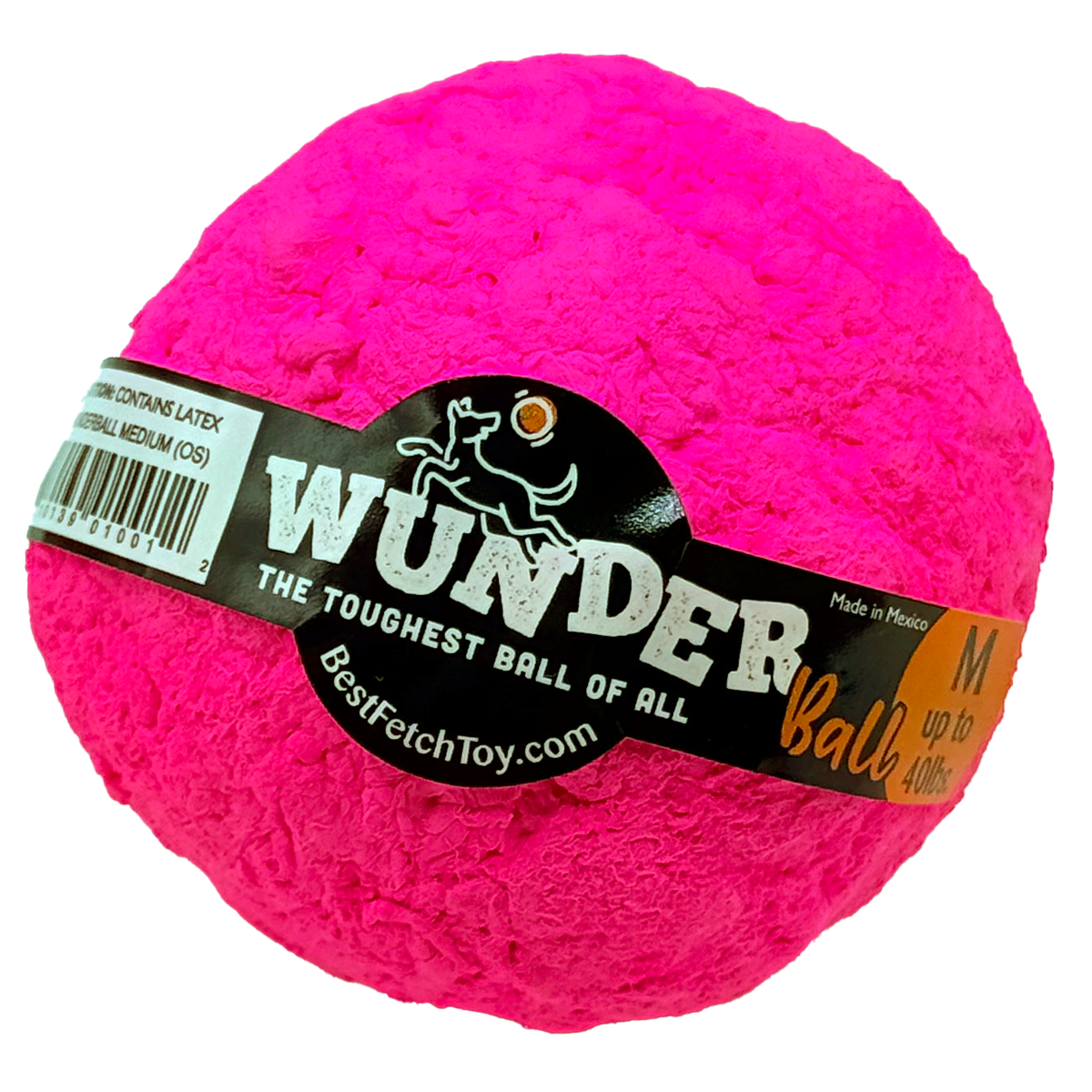
The WUNDERball from WACKYwalk'r is specifically designed with this principle in mind. Because the ball isn't perfectly round, it bounces in unexpected directions that mimic natural prey movement. Your dog can't predict where it will go next, which triggers a deeper engagement with the chase.
Triggering the Chase Instinct Through Visual Variance
Dogs process movement differently from humans. Their eyes are particularly sensitive to motion, especially erratic motion that suggests something alive and worth pursuing. When a ball bounces unpredictably:
- Visual tracking becomes more intense and focused
- It engages the brain’s reward systems
- Instinctual hunting behaviors emerge naturally
- Each chase feels like a fresh experience
Cognitive Benefits of Unpredictable Play
The surprise factor in dog toys isn't just about fun. It delivers real cognitive benefits that support your dog's long-term mental health and physical coordination.
Improving Reaction Time and Proprioception
Proprioception refers to your dog's awareness of their body in space. When chasing an unpredictable ball, your dog must constantly adjust their position, speed, and direction. This builds:
- Faster reflexes and response times
- Better balance and coordination
- Improved spatial awareness
- Stronger muscle memory for quick movements
Older dogs can benefit from mentally stimulating play, but activities involving unpredictable movement should be adjusted for their mobility and joint health, ideally under veterinary guidance.
Problem-Solving and Mental Exhaustion Factors
Here's something many owners don't realize: mental exhaustion is just as valuable as physical tiredness. A dog who has been mentally challenged during play will rest more contentedly than one who simply runs back and forth.
Unpredictable toys force your dog to think. Where will it go? How fast should I move? Should I wait or pounce? These split-second decisions engage the problem-solving parts of your dog's brain, creating a satisfying tiredness that physical exercise alone can't achieve.
Design Features That Create the Perfect Chaos
Not all erratic bounce toys are created equal. The best ones combine specific design elements that maximize unpredictability while remaining safe and durable.
Geometric Shapes: Nubs, Ridges, and Asymmetry
The secret to unpredictable bounce lies in asymmetrical design. When a ball has irregular surfaces, each contact with the ground produces a different result. Look for toys featuring:
- Textured surfaces with varying nub heights
- Asymmetrical shapes that prevent uniform rolling
- Multiple contact points that change bounce angles
- Irregular weight distribution throughout the toy
The WUNDERball exemplifies this approach. Its handcrafted design means no two bounces are identical, keeping your dog guessing throughout the entire play session.
Material Density and Weight Distribution
Material matters more than most owners realize. The density of the rubber, the distribution of weight, and the flexibility of the surface all affect how a ball behaves when it hits the ground.
High-quality options use recycled rubber that provides both durability and unpredictable bounce characteristics. The textured surface also offers dental benefits, helping clean your dog's teeth during chewing sessions between throws.
Safety Considerations for High-Intensity Bouncing
Excitement is wonderful, but safety comes first. When introducing erratic bounce toys, keep these guidelines in mind:
- Start on soft surfaces like grass to prevent joint strain
- Watch for signs of overexertion, especially in hot weather
- Choose appropriately sized toys that can't be swallowed
- Inspect toys regularly for damage or wear
- Allow rest periods between intense play sessions
Dogs can become so focused on the chase that they ignore their own physical limits. It's your job to monitor their breathing, energy levels, and overall condition during play.
Maximizing the Surprise Factor in Daily Exercise
Getting the most from unpredictable toys requires some strategy. Simply throwing the ball isn't enough to fully engage your dog's instincts.
Try varying your throwing technique, sometimes high, sometimes low, sometimes with a bounce first. Play on different surfaces since grass, sand, and pavement all produce different bounce patterns. Incorporate hiding games where you roll the ball into tall grass and let your dog search for it.
The WUNDERball works especially well in water since it floats, adding another dimension of unpredictability when waves or currents move it around. Beach and pool play become infinitely more interesting when the toy doesn't behave the same way twice.
Bringing More Joy to Every Fetch Session
Understanding why dogs love the surprise factor changes how you approach playtime. It's not about throwing harder or farther. It's about engaging your dog's natural instincts through unpredictability and challenge. The right toy transforms a routine activity into an adventure that satisfies your dog's deepest drives.
Your dog deserves play sessions that light up their brain and tire their body in equal measure. By choosing toys designed with erratic bounce in mind, you're giving them exactly what their instincts crave: the thrill of the unpredictable chase.

Frequently Asked Questions
Why does my dog lose interest in regular balls?
Dogs are wired for novelty. Once they learn a ball's bounce pattern, the challenge disappears, and boredom sets in. Unpredictable toys maintain interest by creating new challenges with every throw.
Are erratic bounce toys safe for puppies?
Yes, but supervise closely and choose size-appropriate options. Puppies benefit greatly from the mental stimulation, though play sessions should be shorter to protect developing joints.
How often should I replace unpredictable bounce toys?
Inspect toys before each use. Quality options like those made from durable recycled rubber last significantly longer than cheap alternatives, but any toy showing damage should be retired immediately.
Can older dogs benefit from unpredictable toys?
Absolutely. The cognitive challenge helps maintain mental sharpness, while the varied movement patterns support coordination without requiring excessive physical exertion.